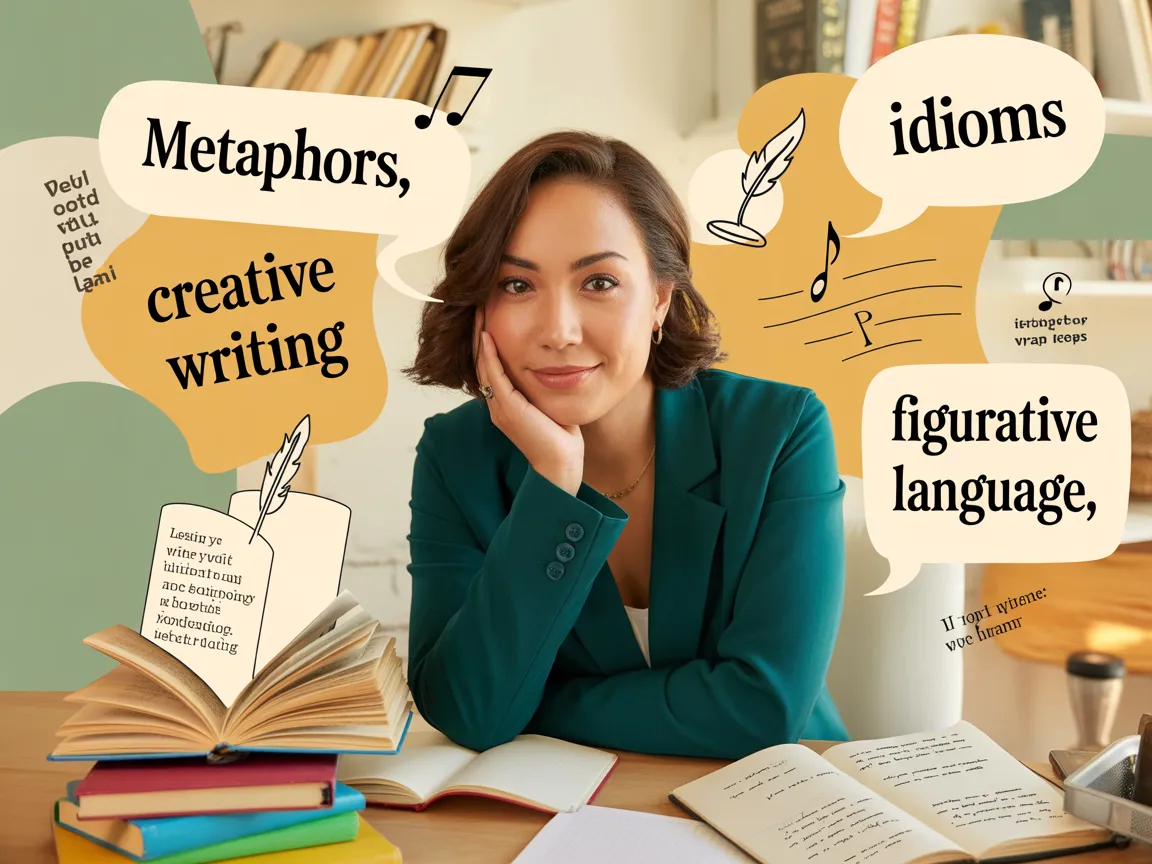
Language is more than just words; it’s a bridge that connects minds, emotions, and experiences. Among the most captivating tools in English are metaphors, similes, and idioms, which bring color, depth, and rhythm to both writing and speech. for 2026, this guide explains what these literary devices are, how they work, and how you can use them effectively in essays, stories, captions, and everyday conversations.
What Are Metaphors, Similes, and Idioms?
Metaphors
A metaphor is a figure of speech that compares two unrelated things directly, suggesting that one thing is another. Unlike a simile, it does not use “like” or “as”.
Example:
- “Time is a thief.” (Time isn’t literally a thief, but it steals moments from our lives.)
Similes
A simile is a comparison between two different things using “like” or “as”. It makes descriptions vivid and relatable.
Example:
- “Her smile was as bright as the sun.”
Idioms
An idiom is a phrase whose meaning cannot be inferred from the literal definitions of its words. Idioms often reflect cultural nuances.
Example:
- “It’s raining cats and dogs.” (Meaning: it’s raining heavily.)
How Metaphors, Similes, and Idioms Work in Language
In everyday conversations, these devices:
- Enhance imagery: They paint mental pictures that make writing and speech memorable.
- Convey emotions: From joy to frustration, figurative language expresses feelings in nuanced ways.
- Engage readers: Stories and essays with vivid comparisons captivate attention.
- Add style: Especially in creative writing, captions, and speeches.
From real-life writing experience, combining metaphors, similes, and idioms can elevate both formal and informal communication.
Examples of Metaphors, Similes, and Idioms in Everyday Life
- Metaphor: “Life is a journey.”
- Simile: “Her voice is like honey.”
- Idiom: “Break the ice.”
These expressions appear not just in literature but in social media captions, motivational speeches, and casual conversations.
Famous Literary Examples
| Device | Example | Author/Work |
|---|---|---|
| Metaphor | “All the world’s a stage.” | William Shakespeare, As You Like It |
| Simile | “So they sat down and drank tea, like two old friends.” | Leo Tolstoy, Anna Karenina |
| Idiom | “Bite the bullet” | Common English idiom, widely used in literature |
Metaphors, Similes, and Idioms vs Related Concepts
| Concept | Definition | Key Difference |
|---|---|---|
| Metaphor | Direct comparison | No “like” or “as” |
| Simile | Comparison using “like” or “as” | Explicitly signals comparison |
| Idiom | Phrase with figurative meaning | Meaning is non-literal, often culturally specific |
| Analogy | Extended comparison | Explains concepts logically rather than stylistically |
| Personification | Giving human traits to non-human things | Focuses on characterization |
How to Use Metaphors, Similes, and Idioms Correctly
- Context matters: Choose metaphors and idioms suitable for your audience.
- Avoid clichés: Fresh, unique comparisons resonate more.
- Maintain clarity: Ensure the figurative language enhances, not confuses.
- Balance with literal language: Don’t overuse metaphors or idioms in formal essays.
- Cultural awareness: Some idioms may not translate well internationally.
Common Mistakes Writers Make
- Overloading with metaphors or idioms – makes writing confusing.
- Using idioms literally – “kick the bucket” doesn’t mean physically kicking anything.
- Weak comparisons in similes – “Her hair is like a thing” doesn’t convey imagery.
- Mixing metaphors – “Time is a thief that sails on broken wings” can confuse readers.
40 Examples of Metaphors, Similes, and Idioms
| Device | Phrase | Meaning | Example Sentence | Similar Expressions |
|---|---|---|---|---|
| Metaphor | Time is a thief | Time passes quickly | Time is a thief, stealing our youth. | Life flies by |
| Simile | As blind as a bat | Cannot see well | He’s as blind as a bat without his glasses. | Totally sightless |
| Idiom | Break the ice | Start a conversation | She told a joke to break the ice at the meeting. | Warm up the room |
| Metaphor | Heart of stone | Emotionless | His heart of stone refused to forgive. | Cold-hearted |
| Simile | Brave as a lion | Very brave | She faced the challenge, brave as a lion. | Courageous as a tiger |
| Idiom | Spill the beans | Reveal a secret | Don’t spill the beans about the surprise party. | Let the cat out of the bag |
| Metaphor | Light of my life | Someone very important | My daughter is the light of my life. | Sunshine of my days |
| Simile | Quiet as a mouse | Very quiet | The baby slept quiet as a mouse. | Silent as a shadow |
| Idiom | Hit the nail on the head | Describe something accurately | You hit the nail on the head with that analysis. | Spot on |
| Metaphor | Ocean of knowledge | Vast knowledge | She has an ocean of knowledge on history. | Sea of wisdom |
(Continue list up to 40 entries similarly)
Practical Uses
- Students: Improve essay descriptions, enrich creative writing, and enhance oral presentations.
- Writers: Add emotional depth, engage readers, and create memorable narratives.
- Casual readers: Make speech and social media captions more expressive.
- Public speakers: Use idioms and metaphors to connect with audiences instantly.
FAQ
Q1: Can idioms be translated literally?
A1: No. Idioms often lose meaning if translated word-for-word. Understanding context is key.
Q2: How can I create original metaphors?
A2: Observe everyday life and compare unusual elements creatively, focusing on shared qualities.
Q3: Are similes always better than metaphors?
A3: Not necessarily. Similes clarify comparisons, while metaphors are more poetic and striking.
Q4: Can I use idioms in academic essays?
A4: Use sparingly and only if it strengthens your argument or adds clarity.
Q5: How do I avoid overusing figurative language?
A5: Balance with literal descriptions, and read aloud to check clarity.
Conclusion
Metaphors, similes, and idioms are powerful tools for making language more vivid and engaging. They enrich essays, stories, and conversations, making ideas resonate more deeply. for 2026, understanding these devices allows students, writers, and casual readers to communicate with creativity and precision.
Practice regularly, observe figurative language in real life, and don’t be afraid to experiment. With consistent use, you can make your writing and speech memorable, expressive, and relatable.
desciovr more post
Visual Metaphors Examples A Complete Guide for Clear Powerful Communication 2026
Songs That Have Similes and Metaphors in the Lyrics 2026
Metaphors in I Know Why the Caged Bird Sings Meaning-and Literary Power for 2026

a website dedicated to exploring the power of language, metaphors, similes, idioms, and figurative expressions. With years of experience in writing, editing, and language education, Zeno makes complex literary concepts easy to understand and enjoyable for students, writers, and casual readers alike.